


What to Fix, What to Avoid, and What Actually Works
When we talk about walls, most people immediately think about what to put on them. Wallpaper, paint, panelling.
But before you even get to that stage, you need to look at the condition of your walls.
Because, especially here in Mallorca, that can completely change what is possible.
Understanding Walls in Mallorca Properties
Working in Mallorca, I see a huge mix of building types.
You might have a beautiful old finca with thick stone walls, or a village house with rustic finishes, or a brand new build with plasterboard walls. Each one behaves very differently, and that matters.
One of the first properties I owned here was actually a ruin that Bruce and I converted. There was one wall in the middle of the house where nothing would stick! Paint, finishes, everything just came off. It turned out it had been coated in lime paint years before. Until that was properly dealt with, nothing else was ever going to work. This is the reality with older Mallorca properties. You may also be dealing with rising damp, chalky surfaces, or flaking finishes. In those cases, you cannot simply cover the problem. And until you have resolved that you have to rule out certain finishes like wallpaper or decorative cladding.
For a real example of how materials and finishes come together in a full renovation, you can explore this complete seafront renovation in Puerto Pollensa.
Not All Walls Are Created Equal
On the other end of the spectrum, newer properties often use plasterboard. These are great for achieving a smooth finish. They’re ideal for painting and wallpapering. But they do come with limitations, if the wall hasn’t been reinforced properly, you may not be able to hang heavier items like televisions or floating units.
So again, before you think about design, you need to understand what your wall can actually support.
Wall Coverings, What Works and What Doesn’t
Once the wall itself is sorted, then we can start talking about finishes.
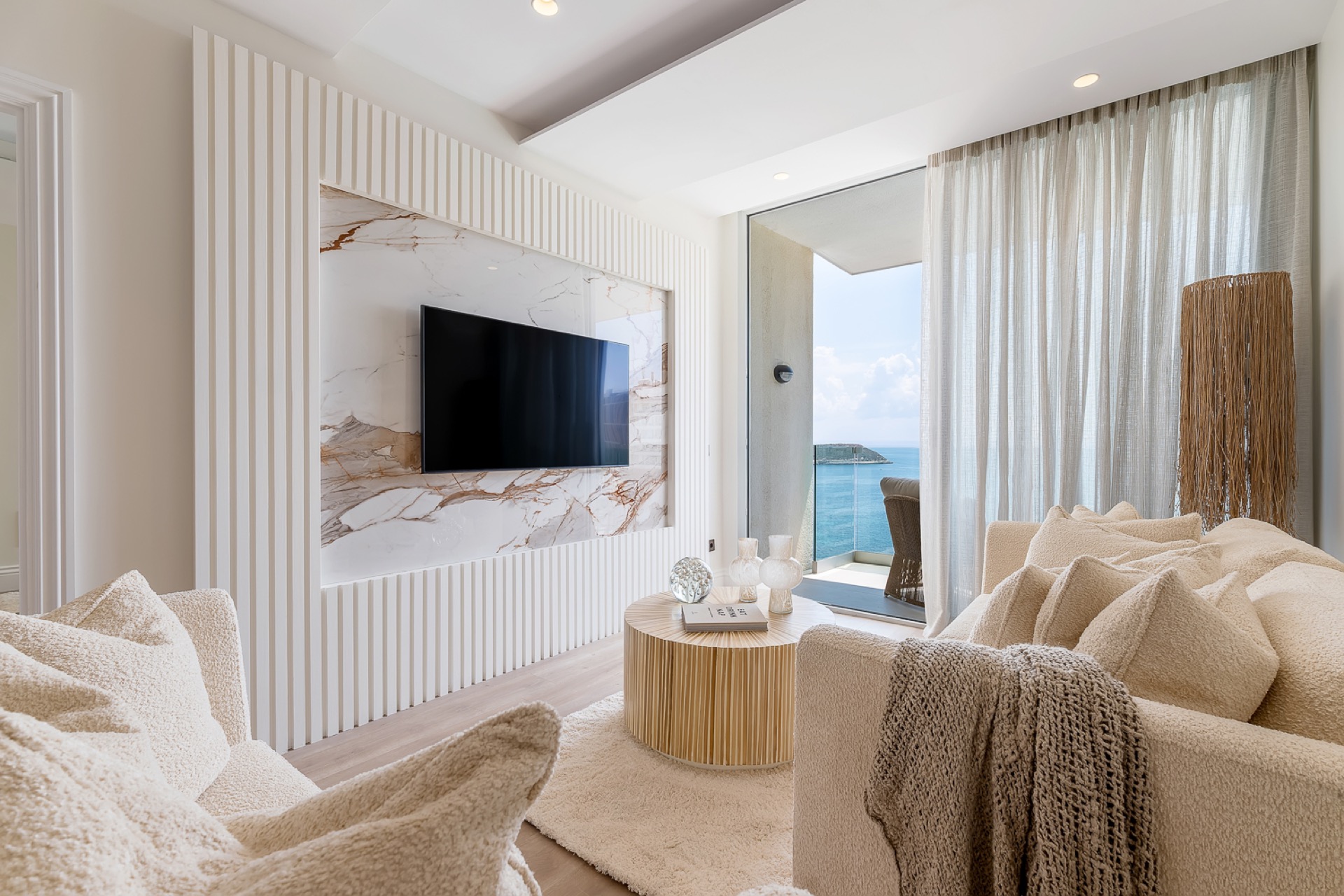
Let’s start with something I’m seeing everywhere at the moment, wooden slatted wall panels.
They were originally designed for soundproofing, and they do work well for that. I still use them in spaces like TV rooms or gyms where acoustics matter.
But they are being overused, and more importantly, they will date your property.
That doesn’t mean don’t use them. It means use them carefully. And if you do, think beyond the obvious. Change the orientation, paint them, frame them, or customise them so they feel considered rather than copied.
There are also some beautiful bespoke wall panelling options available now, with different shapes, spacing, and finishes. These can work incredibly well if they are designed specifically for the space.
Wallpaper, Use It Properly
Wallpaper has come a long way.
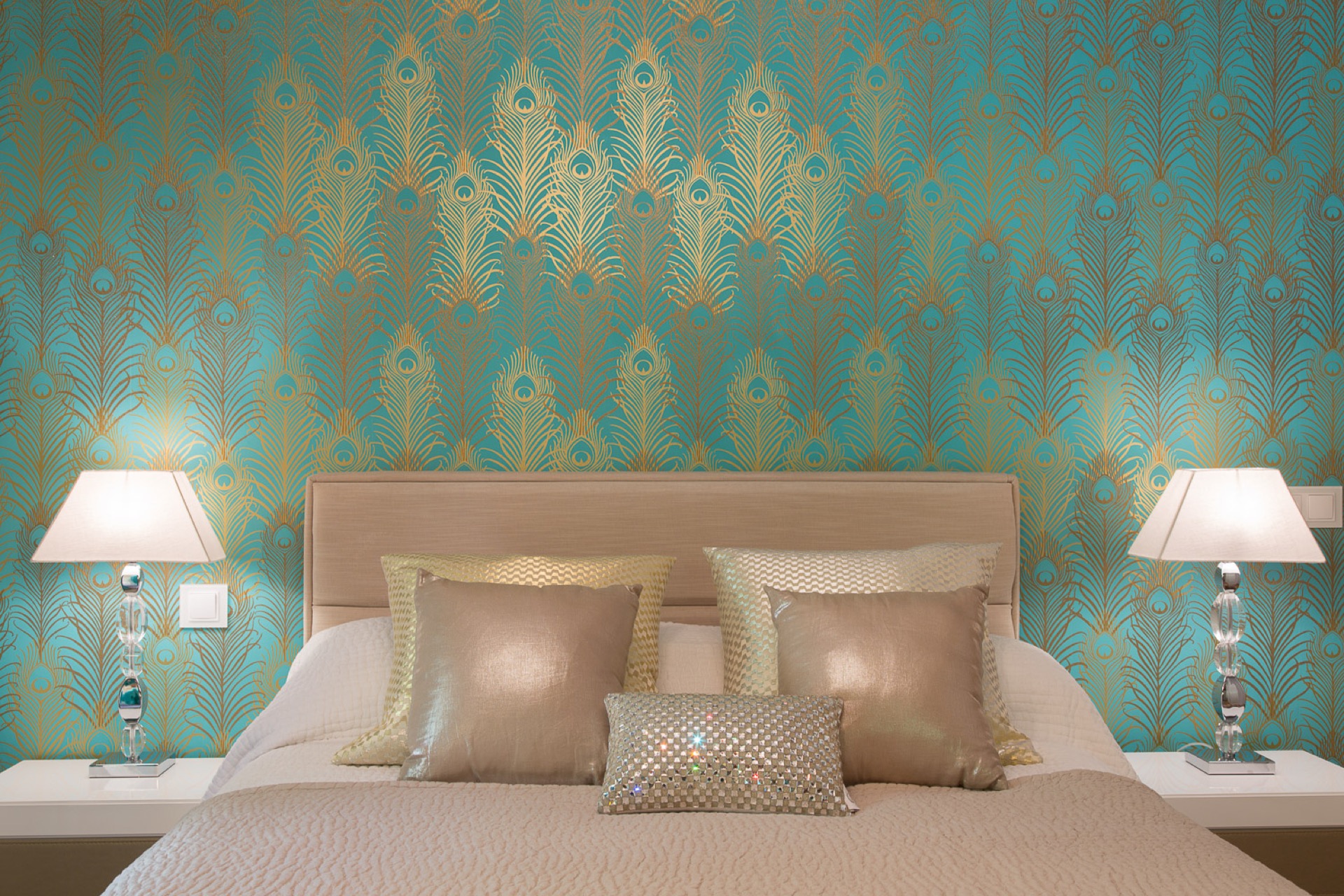
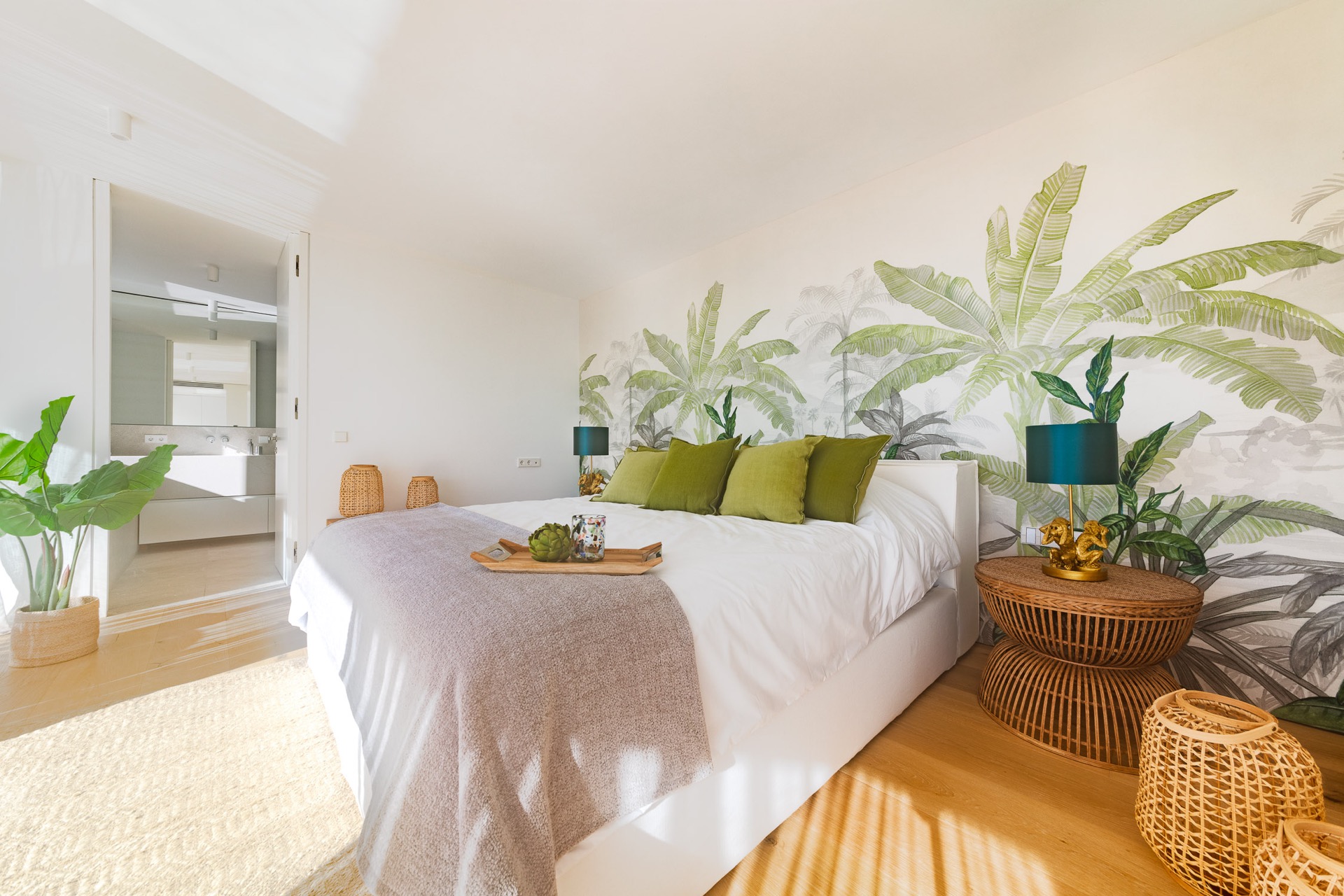
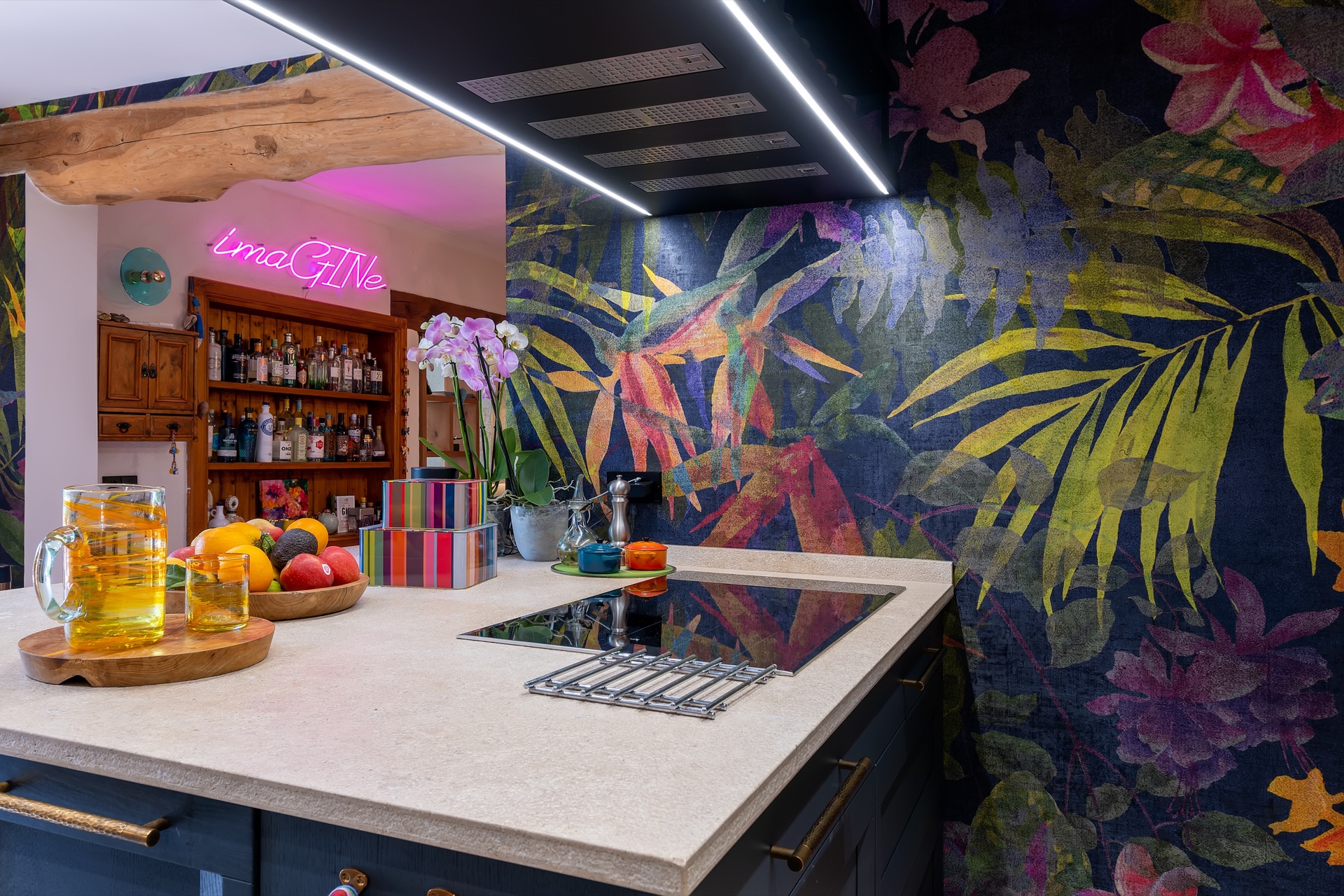
And one of the biggest misconceptions is that it has to be limited to a single feature wall, you can use wallpaper everywhere: on all walls, on ceilings, inside cabinets, even inside drawers. Where I do encourage people to be bold is in smaller spaces. Guest bathrooms, for example, are perfect for this. You can go all in with colour and pattern because you’re not living in that space all day.
If you want to better understand how materials, colour and texture shape interiors in Mallorca, read our guide on infusing local charm into your home in Mallorca.
The Biggest Mistake with Paint in Mallorca Homes
This is the one I see time and time again.
People repaint a property and default straight to standard, off-the-shelf white.
It feels like the safe option: clean, fresh, simple, but in Mallorca, this very rarely works.
What it actually does is highlight everything that isn’t new. Light switches, air conditioning units, older fittings, suddenly they stand out more because any white plastic may have yellowed with age.
So instead of making the space feel fresh, it can make it feel tired. The key is choosing the right tone of white. Usually something warmer, something that works with the flooring, the light, and the existing materials in the room. Because in Mallorca homes, your floors, especially if you have terracotta or stone, play a huge role in how your walls will look.
Designing Older Mallorca Homes
With older properties, there’s often a hesitation to move away from tradition.
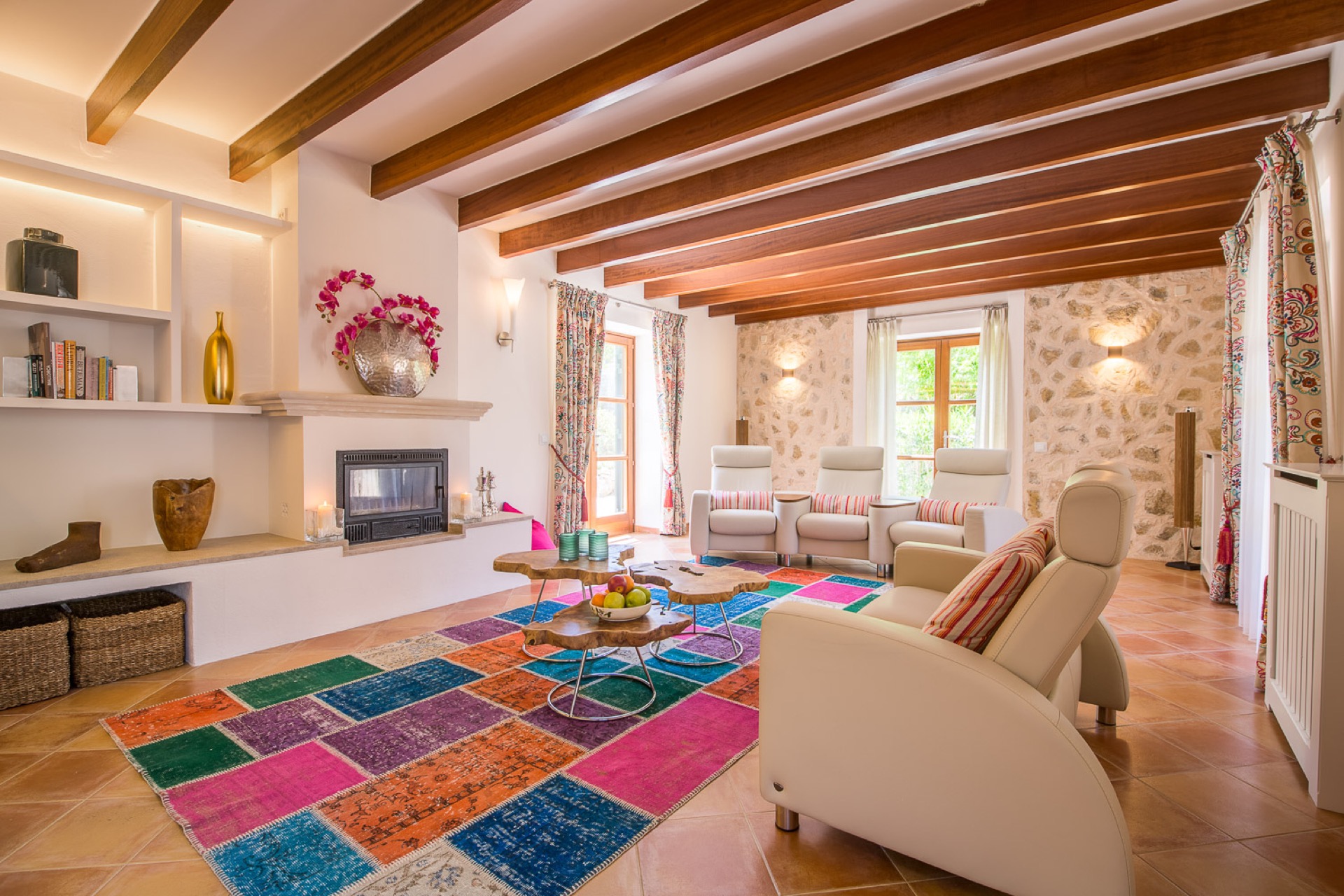
White walls and exposed beams give lots of contrast. But that doesn’t mean it’s the best solution. In many cases, I will paint everything: walls, beams, woodwork. This isn’t removing character, it’s softening it. The beams won’t disappear. They become texture rather than strong visual lines. The whole space feels more cohesive, and it gives you more freedom with furniture and styling. This approach works particularly well in second homes, where you want a more relaxed, unified feel.
You can see this approach in practice in this renovated family retreat in Mallorca, where traditional elements are softened without losing their character.
Using Walls to Change the Feel of a Room
Walls are not just about finishes. They can completely change how a space feels.
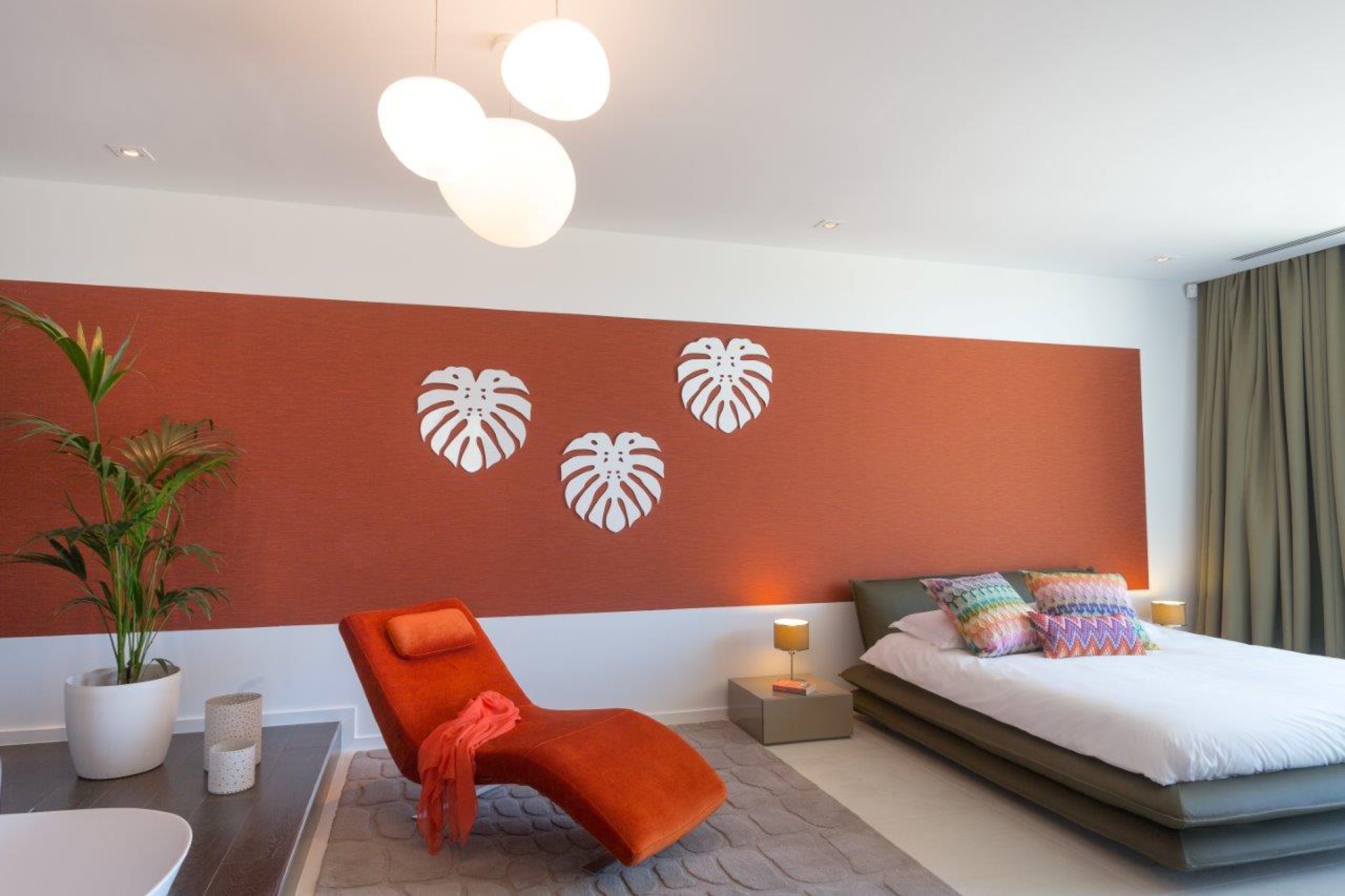
If you have very high ceilings and the room feels overwhelming, you can bring that height down visually. A ceiling colour, or a painted or papered section with a dividing line, can make the space feel more comfortable. You can also use colour to change the proportions of a room, making it feel wider, longer, or more balanced. These are subtle changes, but they make a huge difference to how a space is experienced.
This kind of indoor-outdoor balance is also key in Mallorca homes, as shown in this luxury villa project in Son Gual.
Simple Upgrades That Make a Big Difference
You don’t always need a full renovation to improve your walls.
Even something as simple as adding panelling to flat doors can completely change the feel of a space. If you have plain doors, you can add beading, paint over it, and suddenly they look far more considered and architectural. It’s a small change, but it can elevate the entire room.
Where to Start
With the wall itself: understand its condition, its structure, and how it behaves. Then think about how you live in the space, especially if it’s a holiday home in Mallorca. Only then should you decide what goes on it. Because when you get that right, everything else becomes much easier.
If you’re planning a renovation or redesign, explore more ideas on creating homes to love and live in.
FAQs: Walls in Mallorca Homes
What should I check before decorating walls in a Mallorca property?
Always check the condition of the wall first. In Mallorca, especially in older properties, you may be dealing with lime coatings, damp, or unstable surfaces. These need to be resolved before you consider paint, wallpaper, or panelling.
What is the best wall finish for a holiday home in Mallorca?
It depends on the property, but generally you want finishes that feel light, breathable, and easy to maintain.
Can I use wallpaper in a Mallorca home?
Yes, and it can look fantastic. But in a second home or holiday property, it’s important not to overdo it. Too much pattern can make a space feel heavy rather than relaxed. Balance is key, and advice from an experienced interior designer can be helpful.
Why doesn’t standard white paint work well in Mallorca?
Because of the light and the materials used in Mallorca homes. Bright white can make older elements stand out in a negative way and can feel too harsh in strong sunlight. Warmer tones tend to work much better.
How do I make an older Mallorca property feel more modern?
You don’t need to remove the character, but you can soften it. Painting beams, woodwork, and walls in a cohesive palette can modernise a space while still keeping its original charm.
Are wall panels a good idea for Mediterranean homes?
They can be, but they need to suit the property. Some modern panelling styles can feel out of place in traditional Mallorca homes. It’s important to choose designs that work with the existing architecture.
What works best for second home design in Mallorca?
Simplicity and durability. Your walls should support a space that feels easy to use, low maintenance, and welcoming from the moment you arrive. That often means keeping the base calm and adding interest in a more controlled way.
Can wall colours affect how a room feels?
Absolutely. Colour can make a room feel larger, smaller, warmer, or more relaxed. In Mallorca, where light is strong, choosing the right tone is especially important for creating a comfortable atmosphere.
How do I achieve a Mediterranean living feel in my home?
Focus on light, texture, and balance. Use materials and colours that reflect the environment, avoid overly heavy finishes, and design spaces that flow easily between indoors and outdoors.