


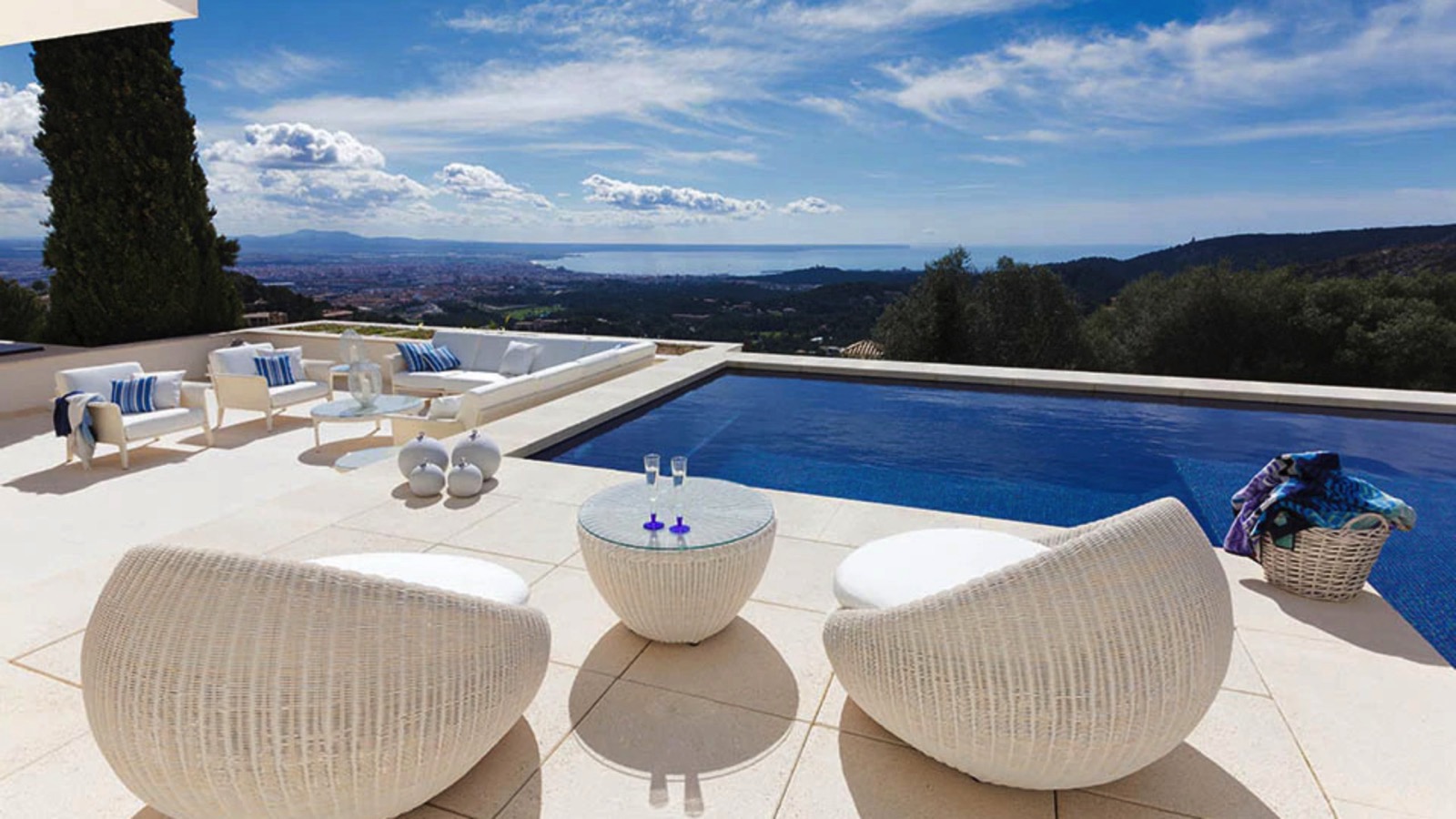
In Mallorca, outdoor space is not a bonus. It shapes the way the whole home is lived in. In many Mallorcan homes, especially during the warmer months, it is the most important “room” of the house. It is where you eat, relax, entertain, read, work, exercise, take in the sun, cool down and enjoy the reason you are here in the first place!
I think this is one of the things people often underestimate, especially if they are coming from a colder climate. They may see the terrace as an extra, when in reality it is likely to be used as much as the interior, and sometimes more.
That is why, when I am designing a home as an interior designer in Mallorca, I like there to be a natural flow from inside to outside and outside to inside. Your outdoor space should feel connected to the rest of your home. It should feel considered, comfortable and easy to use, not like an afterthought.
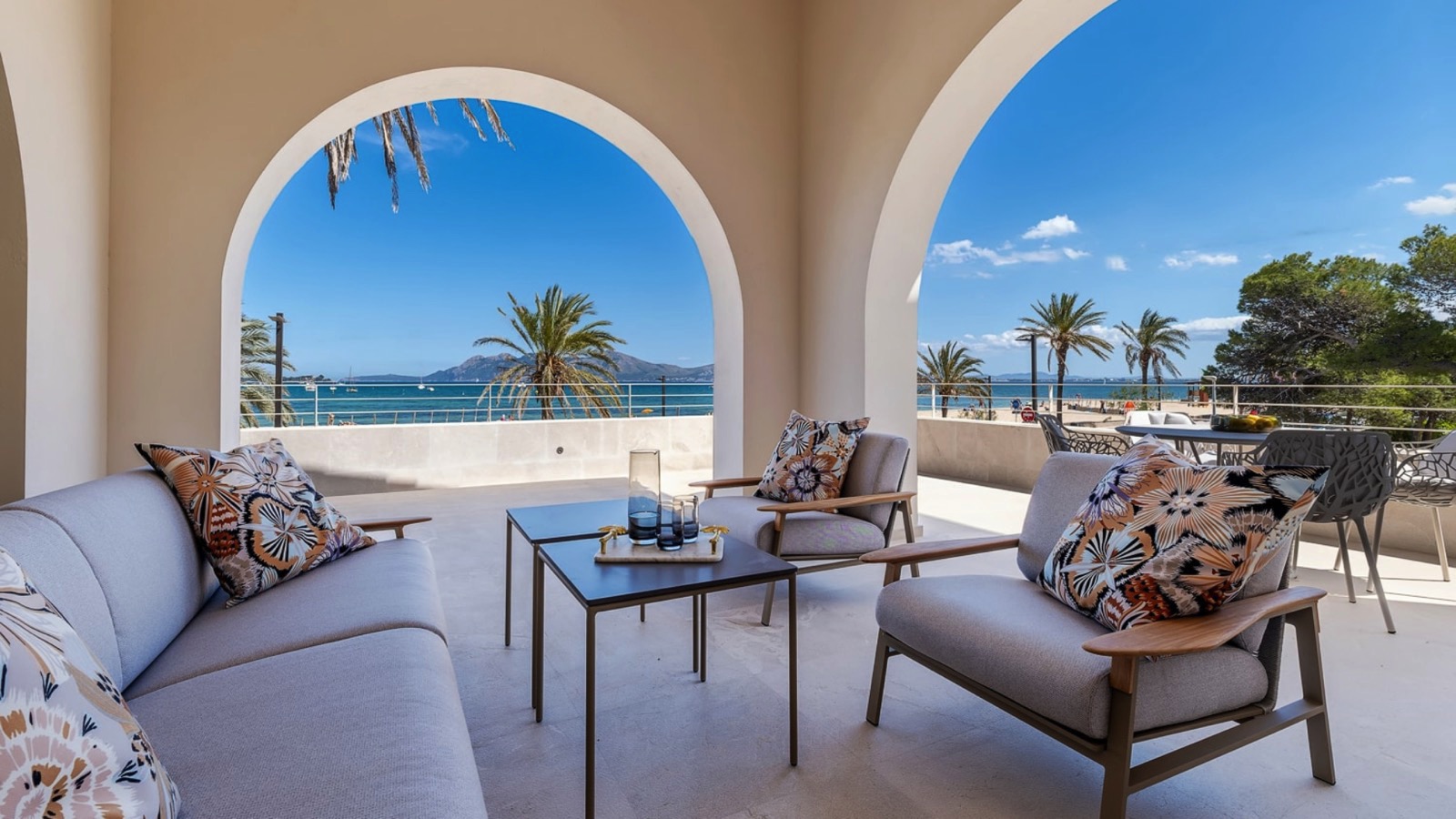
Start with the Climate, Not the Catalogue
Before choosing furniture, cushions or accessories, the first thing I think about is the climate and the orientation of the outdoor space.
Is there shade? Is it protected from the wind? Is it on a rooftop, in a garden, in the countryside, underneath pine trees, close to the coast or part of a community? All of these things will affect the decisions I make.
For example, if someone has bought a penthouse with a beautiful roof terrace and amazing views, the furniture needs to be substantial enough not to be blown around. It may also be more exposed, with less natural shade or shelter, so I need to think carefully about materials, cushions, storage and protection.
A garden terrace may have different issues. There may be more shade, more storage and more shelter, but there may also be pollen, leaves, plants and debris to consider. If the terrace is underneath trees, the fabrics and furniture will need to cope with that. If it is in a very exposed position, wind becomes a major factor.
So many people start with the look. They see a piece of outdoor furniture they like and imagine it in their home. But in Mallorca, you have to start with how that space is actually going to behave. How hot will it get? Where is the sun in the afternoon? Is there air movement? Will cushions need to be stored? Can the furniture stay outside all year?
The three questions I always come back to with my clients are:
- When are you going to use it?
- How are you going to use it?
- Who is going to use it?
Once you can answer those three questions, you have a much clearer idea of what you need.
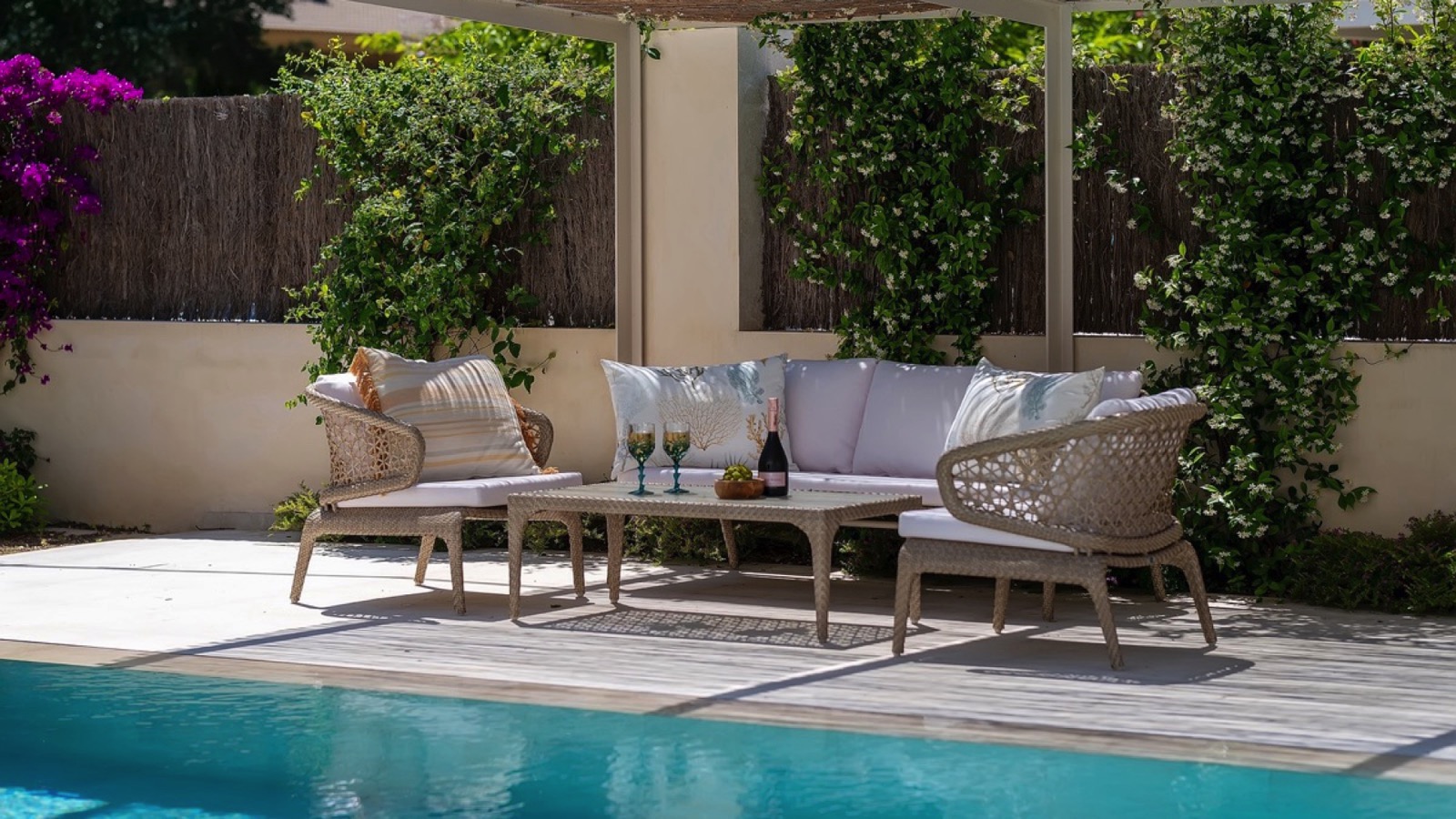
Outdoor furniture that survives Mallorca
One of the biggest mistakes I see people make when choosing outdoor furniture in Mallorca is underestimating how hard the climate is on it. It is very easy to fall in love with something that looks beautiful in a showroom, but you also have to think about heat, humidity, strong sun, dust, pollen, red rain and the winter damp. In Mallorca, outdoor furniture has to do much more than look good, it has to survive and look good doing it!
That is why I always encourage clients to think about their outdoor spaces early in the design process. For many homes here, especially second homes and holiday properties, the terrace, pool area or garden is used as much as the interior, sometimes more. Outdoor furniture is not an extra. It becomes part of the way the home is lived in. You can see how these principles have been applied in many of my Mallorca interior design projects.
The materials I can trust are the ones that suit both the property and the climate. Teak is a classic choice and it is definitely having a comeback. It is durable, it ages beautifully and it can be revived, but you do have to decide how much maintenance you want. Some clients love the soft grey colour teak develops when it is left to weather naturally, others prefer to oil, clean and sand it occasionally to keep it looking fresher. Neither is wrong, but you need to know what you are buying and what it will require.
Natural rattan is another material people often misunderstand. It can be beautiful, but it needs to stay fairly dry, so I would only use it outdoors in the right covered setting. For most Mallorca terraces and gardens, good-quality synthetic rattan is the more practical choice. It gives a similar woven look but with far better resilience. The important thing is quality because cheaper synthetic rattan rarely lasts as well.
Aluminium is still a very strong option for Mallorca. It is lightweight, easy to clean and practical, particularly for second homes where furniture needs to be easy to live with. Rope detailing can also work well, but only if it is a high quality exterior-grade rope. Nautical-grade rope is very different from decorative rope that may deteriorate over time. As always, it is not just about the look, it is about understanding what the material is designed to do.
Clients are now tending to choose outdoor furniture that feels much closer to indoor furniture. Sofas are deeper, softer and more inviting, they may look upholstered, but they use exterior fabrics and quick-dry foam, so they can cope with being outside. That makes complete sense in Mallorca because the terrace becomes the summer living room, so comfort matters as much as appearance.
There are definitely pieces that look good in a showroom but do not work well in real Mallorca life. Low-quality woven furniture, the wrong kind of rope, unsuitable woods and anything that has not been designed for sun, humidity and seasonal change can become a problem very quickly. This is why we have all our outdoor furniture outside all year round at Knox Design. This means my clients can see for themselves how it responds to the local climate.
One very practical piece of advice I always give is to be careful with dark tabletops. Dark frames can work beautifully, especially with modern architecture or darker window frames, but dark table surfaces are another matter. In the Mallorca sun they get extremely hot, radiating heat AND they show every speck of pollen and dust! They may look sleek at first, but in daily life they can become annoying very quickly.
When clients are surprised by the cost of good outdoor furniture, I explain that outdoor pieces often have a harder job than indoor ones. They have to cope with sun, heat, damp, dust, pollen and periods of non-use, while still looking good and being comfortable. Buying well usually means buying once. Cheaper options can be tempting, but if they fade, warp, rust or become uncomfortable after one or two summers, they are not really good value.
The best outdoor furniture for Mallorca is furniture that suits the climate, the property and the people using it. It should be beautiful, but it also has to be practical, comfortable and ready to use. When you choose well, the terrace stops feeling like a furnished outdoor area and becomes one of the most enjoyable parts of the home.
Shade Is Not Optional
Shade is one of the first things I look for in any outdoor space in Mallorca. During the height of summer, it is not a luxury, it is what makes the space usable.
In my own home I have several different areas for eating outside, lounging and entertaining. But there was one area we hardly used in the summer because it was simply too hot. It was actually perfect in winter because it was protected, but in July and August there was not enough shade and there was no air movement. So I changed it.
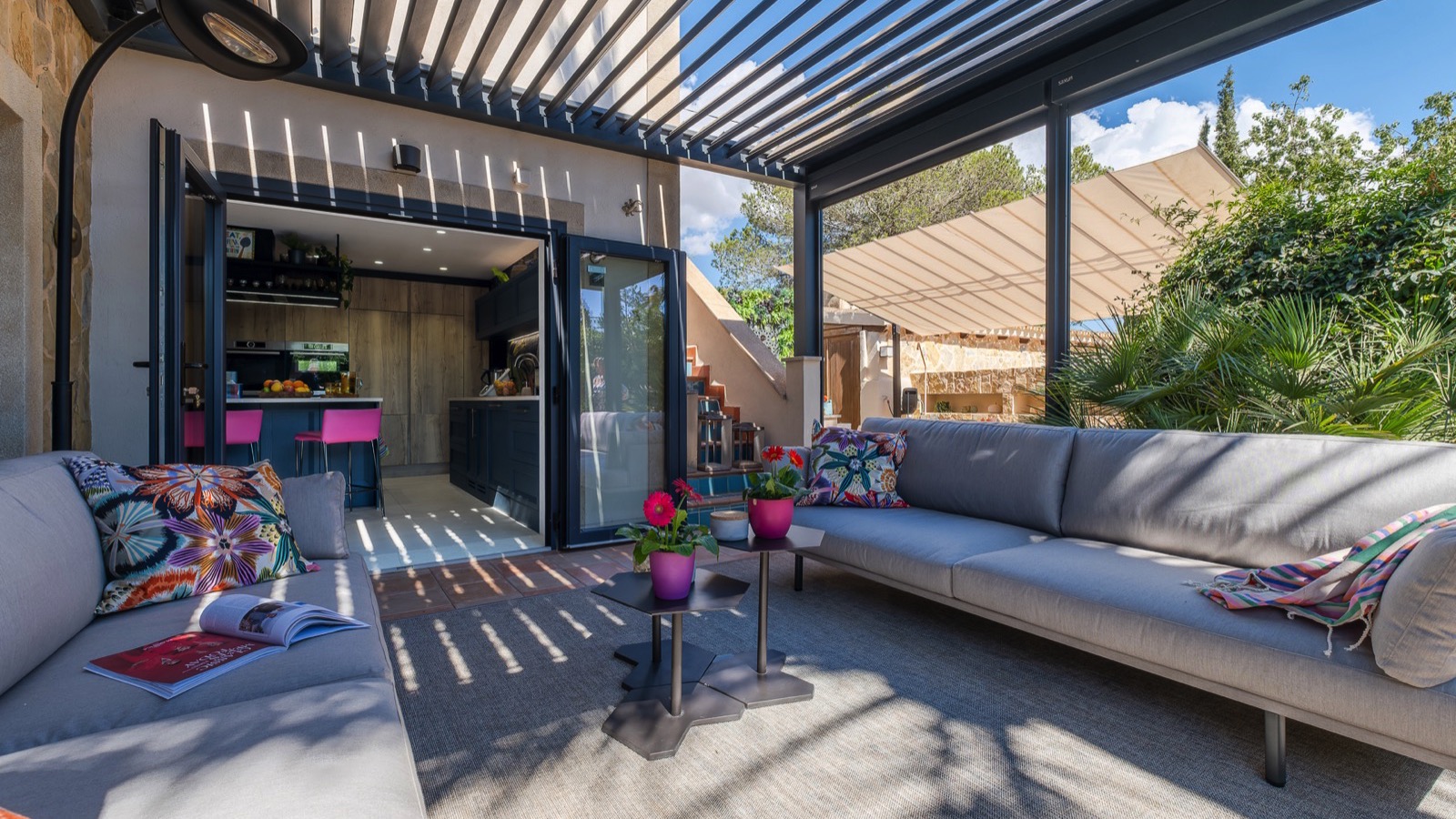
I added a pergola for shade, with drop-down blinds so that as the sun moves, there would be shade from the side as well. I also put in electrics and added a ceiling fan above the table which made a huge difference. If you can wire in a ceiling fan, that is ideal. If not, a good standing fan can still help. The important thing is that on very hot days, you need some movement of air.
Shade also protects the interior: if the terrace is directly outside your living room, shading the terrace and the glass behind it can help reduce the amount of heat coming into the house. That can make the interior feel cooler for longer and reduce the need to put the air conditioning on quite so high.
The type of shade you choose will depend on the property. A pergola, awning, sail shade, parasol, blinds, planting or architectural overhang can all work, but the solution needs to fit the space and how you use it. You also need to think about wind, storms and storage, because we do get windy days and sudden summer storms here too.
Make the Terrace Feel Like Part of the Home
To make a terrace feel connected to the interior, you need to think about colour, furniture style, textiles and the overall mood of the home.
What you do not want is an ultra-modern interior that suddenly opens onto a very classic outdoor furniture setting, or the other way around. That can make one area feel disconnected from the other. The priority is balance.
My advice is to take the same colour scheme you have used inside and move it outside. If you have warm woods, rattan, terracotta, teal, linen or patterned textiles inside, you can echo those outside in weather-appropriate versions. I am a big fan of colour and mixing colours and patterns, so if there is already a rich palette inside, it is often easy to pick up some of those tones outside.
The mistake a lot of people make is that they buy the furniture, put it outside on the terrace or balcony, and then stop there. They have somewhere to sit and somewhere to eat, but it still does not feel quite like home.
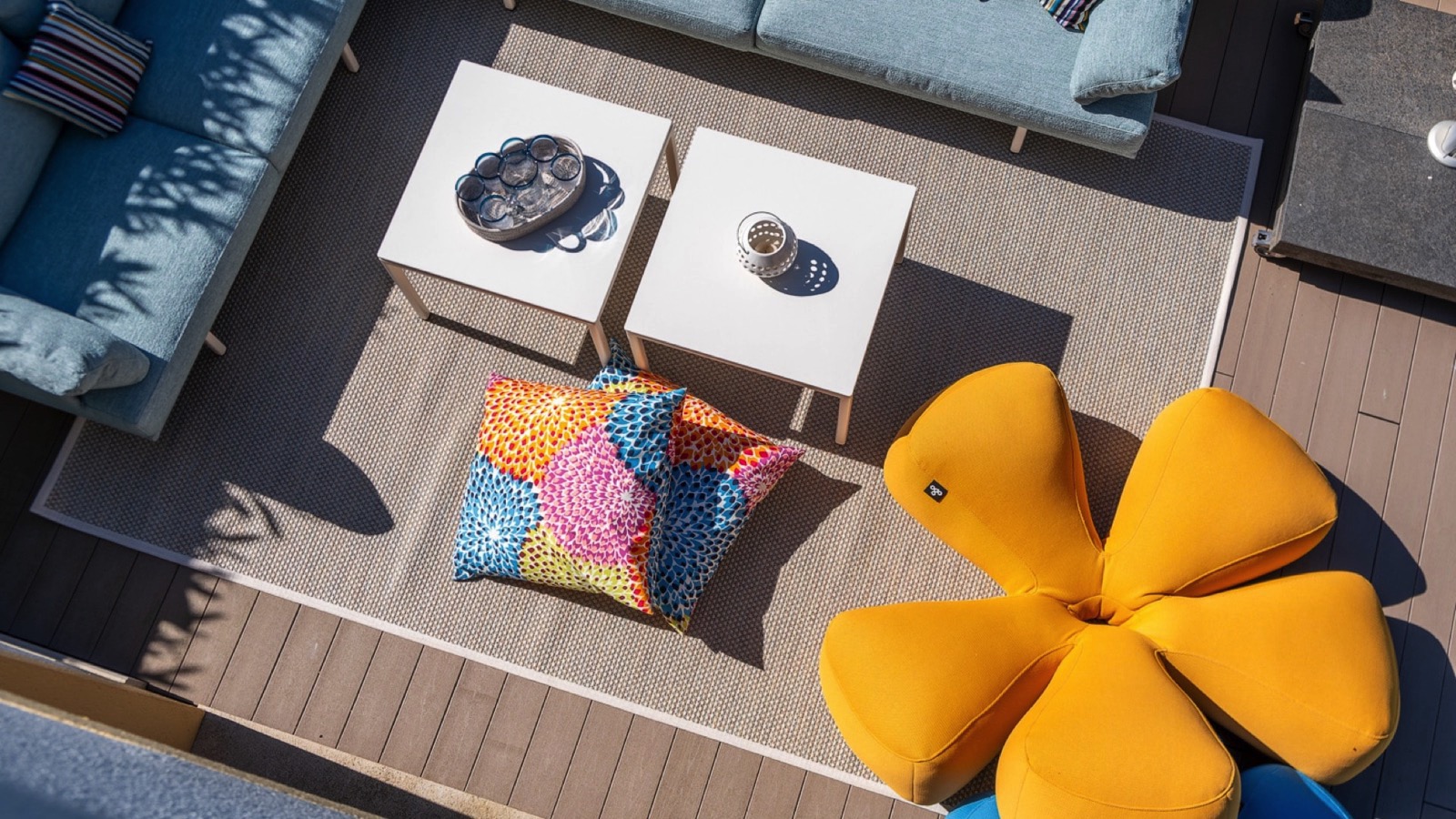
That is where the finishing details matter, so think about the outdoor space in the same way you think about the interior. A simple solution can be to add a rug, it makes the seating area feel warmer, larger and more connected, and on hot days it also means you can take your shoes off without burning your feet on the tiles. There are some wonderful “weather proof” rugs on the market that I use in my designs, and you can have them made to measure as well if you prefer.
For more cohesion, try adding cushions, lighting and candles for the evening. Use decorative ware, accessories and textures. These are details you would naturally use inside your home, and they are just as relevant outside.
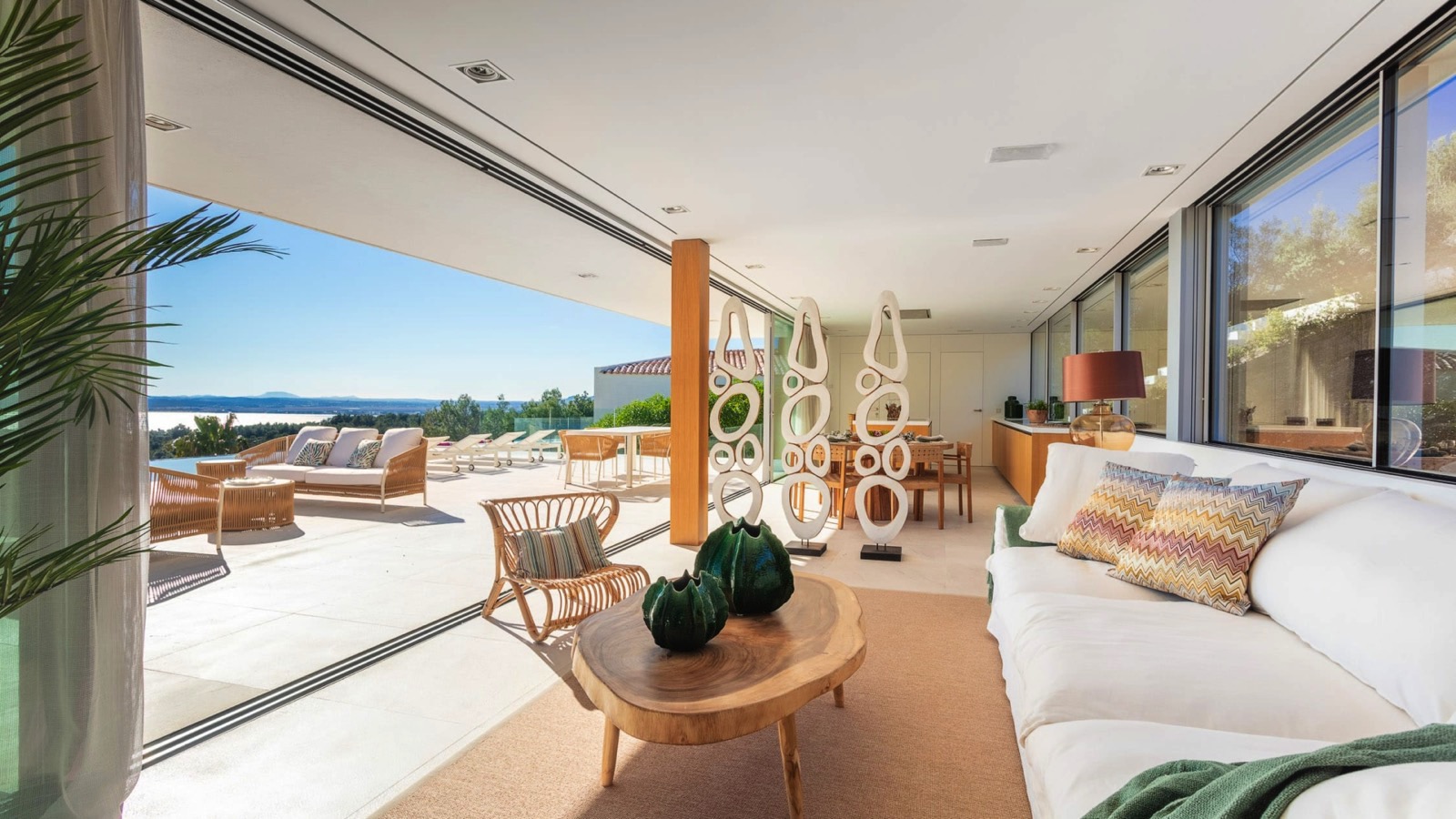
On a project I worked on in Bonaire Villa, the villa had a very seamless connection between inside and outside. The front of the property had foldable doors that disappeared completely, so there was almost no division between the interior and the terrace. The textures, colours and designs flowed from one space to the next, but you still felt that there was an indoor living area and an outdoor living area. The owners were really happy with it, and I loved working on that project because it showed exactly how powerful that indoor-outdoor connection can be.
Design for How People Actually Live
When you are redesigning your outdoor space, you need to think about when, how, and who is going to use it.
Do you want somewhere to eat breakfast in the morning? Somewhere to dine with friends in the evening? Somewhere to read? Somewhere to work on your laptop? Somewhere to lie in the sun? Somewhere for children to play? Somewhere to exercise? Somewhere to escape from the rest of the house for ten minutes?
All of those uses need different things.
If you are going to dine outside, you need a large enough table, chairs, shade, lighting and maybe a fan. If you are going to work outside, you need a table that does not get too hot, a chair you can sit in comfortably, shade for your screen, access to power perhaps, and enough practicality to make it easy. If you want to sit outside in the evening, lighting shouldn’t be overlooked. If you want to use the space in winter, think about blankets, extra cushions and different textures to make it feel cosy.
Storage is something people often forget. You need somewhere for cushions, covers, yoga mats, children’s toys, exercise equipment, candles, throws or anything else you use outside. Without storage, those things either clutter the space or become inconvenient, and then you stop using them.
This is especially important when you are thinking about wellness. Wellness will mean different things to different people. For me, it might be getting up early, before anyone else is awake, using my outdoor shower (if you haven’t seen it then watch the video here) and having somewhere to hang my bathrobe. That, to me, feels like luxury and wellbeing. For someone else, it might be a quiet corner of the garden with a comfortable chair where they can read a book. It might be space to roll out a yoga mat. It might be somewhere to lift weights. Whatever puts you in a good frame of mind, try to make space for it outside.
But also make sure it does not disturb the rest of the way the outdoor area works. If you have training equipment outside, think about a cupboard where it can be put away, so that for the rest of the day you are not sitting in the middle of a gym. If your dining table is also where you work sometimes, make sure it is practical enough for both. It is all about designing for your real life, not just for a photograph.
The Terrace as a Place to Slow Down
A well-designed terrace should make it easy to stay outside.
That, to me, is where the sense of wellbeing comes from. It is not about adding a wellness label to the space. It is about creating an outdoor area that supports the way you want to live.
If the space is ergonomically designed with your lifestyle in mind, then you are going to feel much more relaxed and literally “At Home”.
If you have to drag furniture around, fight with an umbrella, carry everything from inside or sit at a table that is too hot to touch, you will inevitably use the outside space less which defeats the object of Mediterranean Living in my opinion.
Outdoor living in Mallorca is one of the great pleasures of being here. When it works, it becomes more than a terrace. It becomes part of your daily rhythm. Morning coffee, lunch in the shade, a quiet moment with a book, dinner outside, a winter blanket, an evening candle, a view of the garden. These are the details that make a house in Mallorca feel like home.
Planning a Renovation or Terrace Redesign in Mallorca?
If you are planning a renovation or terrace redesign in Mallorca, or would like to book an interior design consultation in Mallorca, I can help you create an indoor-outdoor home that works beautifully with the island’s climate, lifestyle and architecture.
As part of my consultation with my clients I look at how you really want to use your outdoor space, from shade and furniture to colour, comfort, storage, lighting and flow. The result is a terrace, balcony, garden or poolside area that feels connected to your home and genuinely enjoyable to live in.
FAQs: Outdoor Furniture & Terrace Design in Mallorca
What is the best outdoor furniture for Mallorca?
The best outdoor furniture for Mallorca is designed to withstand strong sun, heat, humidity, dust, pollen, red rain, coastal air and winter damp. The right choice depends on your property, terrace position and preferred level of maintenance. Popular options include teak, iroko, aluminium, high-quality synthetic rattan, exterior-grade rope, ceramic or stone surfaces and weather-resistant fabrics.
What outdoor furniture materials hold up best in Mallorca’s climate?
Teak and iroko are naturally durable hardwoods that age beautifully outdoors. Powder-coated aluminium is lightweight, corrosion-resistant and easy to maintain, while high-quality synthetic rattan and exterior-grade rope provide excellent longevity. Ceramic and stone tabletops also perform well in Mallorca’s demanding climate.
Is teak a good choice for outdoor furniture in Mallorca?
Yes. Teak is one of the most popular choices because it is extremely durable and weathers beautifully. It can either be left to develop its natural silver-grey patina or maintained with occasional cleaning and oiling to preserve its original colour.
Can natural rattan be used outside in Mallorca?
Natural rattan is best reserved for covered outdoor areas where it remains relatively dry. For exposed terraces, gardens and pool areas, high-quality synthetic rattan offers a similar appearance while providing much better resistance to sun, humidity and changing weather.
Is aluminium outdoor furniture suitable for Mallorca?
Yes. Powder-coated aluminium is one of the most practical materials for Mallorca because it is lightweight, low maintenance, weather-resistant and particularly suitable for coastal properties and second homes.
What outdoor furniture materials should I avoid in Mallorca?
Avoid furniture that isn’t designed for outdoor use, including untreated timber, painted MDF, low-quality woven furniture, decorative rope, cheap plastics and non-weatherproof fabrics. These materials can deteriorate quickly under Mallorca’s intense sun, humidity and coastal conditions.
Should I avoid dark outdoor furniture in Mallorca?
Dark frames can work beautifully, but dark tabletops often become extremely hot in direct sun and tend to show dust and pollen more easily. Lighter tabletop finishes are generally more practical for everyday outdoor living.
Why is good outdoor furniture more expensive?
Quality outdoor furniture is built to withstand years of exposure to sun, heat, moisture and seasonal weather while remaining comfortable and attractive. Investing in better materials usually offers greater long-term value than replacing cheaper furniture every few years.
What should I consider when choosing outdoor seating for a Mallorca terrace?
Prioritise comfort as much as appearance. Look for generous seat depth, supportive cushions, weather-resistant fabrics and materials that stay comfortable in warm temperatures. A terrace should feel like an extension of your living room.
What makes ergonomic outdoor seating comfortable?
Comfortable outdoor seating should offer generous seat depth, supportive cushions, a relaxed back angle and well-positioned armrests. High-performance outdoor fabrics and quality foam ensure lasting comfort and durability.
How should I care for outdoor cushions during winter?
Store cushions in a dry, ventilated storage box or indoors whenever possible. If storage isn’t available, invest in fitted weatherproof covers to protect them from prolonged damp and extend their lifespan.
How can I make outdoor furniture last longer in Mallorca?
Choose quality materials, clean furniture regularly, protect cushions when not in use and follow manufacturer care instructions. Proper maintenance will significantly extend the life of your outdoor furniture.
How can I improve cross-ventilation on a Mallorcan terrace?
Create openings that encourage cool air to enter from shaded areas while allowing warm air to escape. Sliding doors, bi-fold doors, pergolas and louvred screens can all improve airflow and make outdoor spaces more comfortable.
Can good terrace design reduce reliance on air conditioning?
Yes. Effective shade, natural ventilation and heat-resistant materials help keep both the terrace and interior cooler, reducing the need for air conditioning during Mallorca’s warmer months.
What is the difference between a fixed pergola and a louvred pergola?
A fixed pergola provides permanent shade, while a louvred pergola features adjustable slats that allow you to control sunlight, ventilation and rain protection throughout the year.
How should I position a pergola for morning sun and afternoon shade?
The ideal position depends on your terrace orientation, but generally a pergola should allow gentle morning sunlight while blocking the stronger afternoon sun, particularly on south and south-west facing terraces.
What plants work well on a pergola in Mallorca?
Bougainvillea, jasmine and wisteria are all excellent climbing plants for pergolas in Mallorca. Choose strong supporting structures and avoid plants that drop excessive fruit, resin or debris over seating areas.
How can I make my Mallorca terrace feel like an outdoor living room?
Create continuity between indoor and outdoor spaces by using comfortable seating, practical tables, outdoor rugs, cushions, lighting and colours that complement your home’s interior design.
How do I visually connect my terrace with the interior?
Repeat materials, colours and textures from inside your home outdoors. Coordinating wood tones, fabrics, rugs, lighting and accessories helps the terrace feel like a natural extension of your living space.
What defines a slow-living terrace in Mallorca?
A slow-living terrace is comfortable, shaded and thoughtfully designed to encourage relaxation. Practical layouts, quality seating and effortless usability make it a place where people naturally want to spend time.
What are the most common mistakes people make with terrace design in Mallorca?
The biggest mistakes include choosing furniture that isn’t suitable for Mallorca’s climate, neglecting shade, buying uncomfortable seating and treating the terrace as an afterthought instead of an extension of the home.